Kindred spirit meaning: the like-minded friend, from Anne of Green Gables to today
A kindred spirit is someone who sees the world the way you do. Here is the dictionary meaning, how a red-haired orphan made the phrase famous, the signs people describe, and whether a kindred spirit is the same as a soulmate.
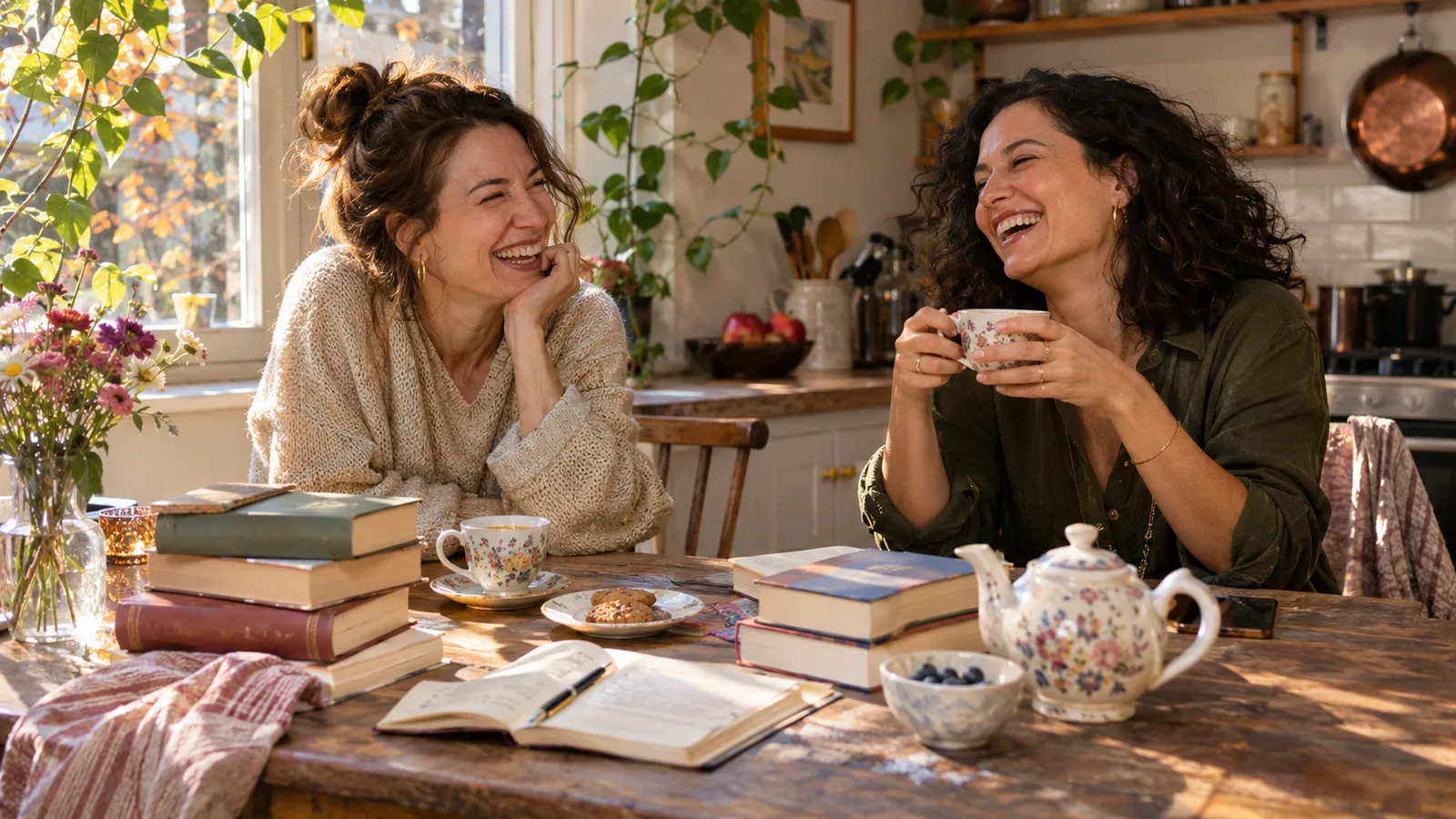
A kindred spirit is a person who shares your interests, values or outlook, someone with whom you feel an easy, natural likeness. Merriam-Webster defines it as “a person with similar interests or concerns.” The phrase is old, but it owes much of its warmth to L. M. Montgomery’s 1908 novel Anne of Green Gables, where Anne calls her best friend Diana a kindred spirit. This guide covers the dictionary meaning, where the phrase comes from, the signs people describe, and how a kindred spirit differs from a soulmate.
The kindred spirit definition
The dictionaries keep it simple. Merriam-Webster: “a person with similar interests or concerns.” Cambridge: “a person who has the same opinions, feelings, and interests as you,” with the example “We recognized each other as kindred spirits as soon as we met.” Cambridge marks the phrase as old-fashioned, and lists it among the words related to soulmate.
“Kindred” means related, of the same kind, as in “kin.” So a kindred spirit is, literally, a related spirit: not family by blood, but family by temperament.
Where the phrase gets its warmth
Many readers first met the phrase through Anne Shirley. Anne of Green Gables, by the Canadian author Lucy Maud Montgomery, was, as Wikipedia notes, “first published by L.C. Page & Co. of Boston on June 13, 1908.” In it, Wikipedia says, Diana Barry is “Anne’s best friend and a kindred spirit,” her “bosom friend.” Anne uses the phrase for others she instantly understands, including her teacher Miss Stacy and the minister’s wife, Mrs. Allan.
That is why searches for “kindred spirit” so often lead back to Anne. The book gave the phrase its modern feel: a person you recognize, often in a moment, as one of your own.
Signs of a kindred spirit, as people describe them
The lists we read overlap a great deal. Mindbodygreen, in a 2020 piece reviewed by a psychotherapist, quotes clinical psychologist Carla Marie Manly: “Kindred spirits are like-minded and like-souled people.” Its signs include “You feel at peace around them,” “You have an unusual amount in common,” “You tend to see things the same way” and “You feel like you know them right away.” Lonerwolf, a spiritual site, adds “It feels like you’ve known this person forever” and “You don’t feel the need to pretend or play games with each other.”
The common core:
Ease. Conversation flows, and silence is comfortable.
Likeness. Shared values, humor and ways of seeing things.
Early familiarity. A sense of knowing them quickly.
Support. You leave time together feeling better, not drained.
Easy return. After time apart, you pick up where you left off.
Kindred spirit vs soulmate
The two overlap without being the same. A kindred spirit is defined by likeness. A soulmate is usually defined by depth: understanding, acceptance and a bond that lasts. Mindbodygreen’s psychologist puts it plainly: “A soul mate does not need to be a kindred spirit,” and the same article notes that soulmates are sometimes opposites. Lonerwolf takes the other view, that “it is absolutely possible for kindred spirits to be soulmates.”
Both can be true. You can meet a kindred spirit at a book club and never see them again. A soulmate, romantic or not, is usually someone with years of shared history. Many of those bonds begin with the spark of likeness. For more on deep friendships, see our guide to the platonic soulmate; for the wider map, see types of soulmates.
Can a kindred spirit be romantic?
Yes, though the phrase leans toward friendship. Mindbodygreen notes that kindred spirits can fall in love, but that many of these connections are not romantic, and that the likeness can sometimes cause confusion about whether two people should become a couple. If a kindred spirit friendship starts to feel like more, the usual advice applies: talk about it, and value the friendship either way.
When likeness is not enough
Kindred spirits are not perfect matches. People who are very alike can share the same blind spots. Lonerwolf warns against “toxic kindred spirits” who “bond over perpetuating the same limited and bigoted worldviews,” and contrasts them with friends who “make us think and question.” The best kindred spirits feel easy and still help you grow.
How the word soulmate grew from the same root
The word soulmate began in a similar place. Its earliest known use, in an 1822 letter by Samuel Taylor Coleridge, was about fit: a spouse whose character suits your own, much closer to a kindred spirit than to a destined stranger. The idea of “the one” came later. We trace that history in our article on soulmate meaning.
Where a portrait fits
If you have a kindred spirit in your life, you already know the feeling of being understood. If you are still hoping to meet one, romantic or otherwise, a portrait is a playful way to picture the kind of person you are drawn to. We cannot tell you who they are, and we do not claim to.
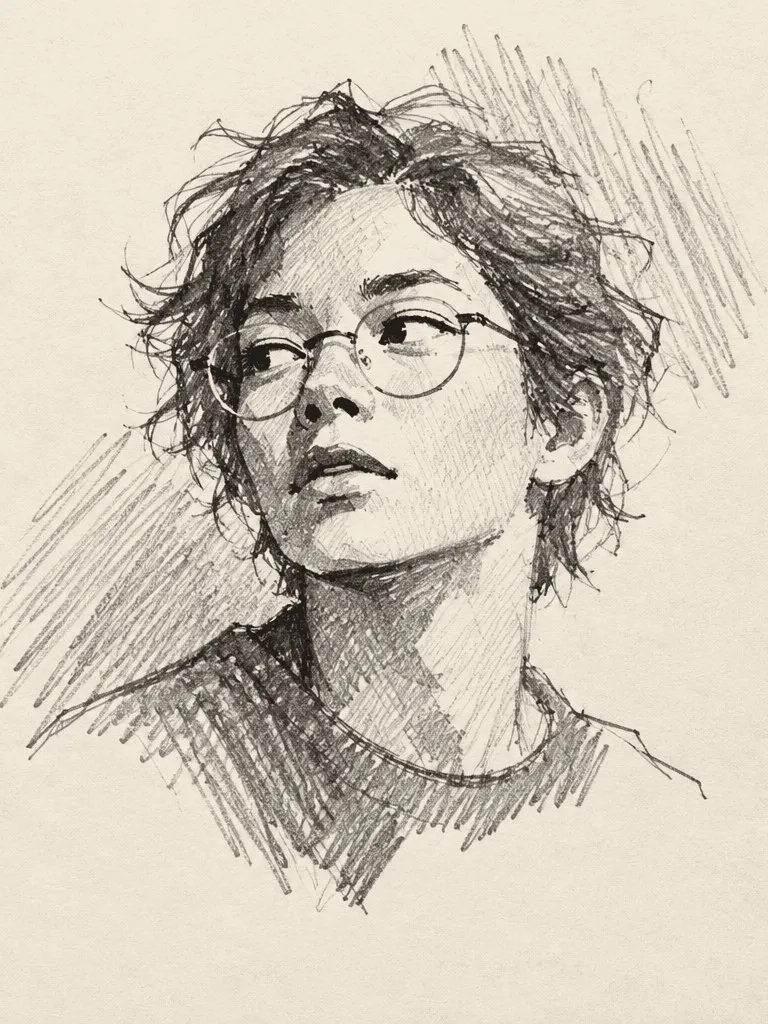
The Soulmate Studio asks seven quick questions about what draws you to someone, where you feel at home and where your heart is right now, plus your birthday (month and day only). You get one portrait, created from your answers in our signature pencil-sketch style, with a short written reading. The face is imagined, not predicted, and it is not a real person. It is for entertainment and reflection.
It means they feel you are alike in the ways that matter to them: values, interests, sense of humor, the way you see the world. Merriam-Webster defines a kindred spirit as a person with similar interests or concerns. Said warmly, it is a compliment, a way of saying that being with you feels easy and familiar.
Not necessarily. A kindred spirit is defined by likeness; a soulmate by depth and a lasting bond. A psychologist quoted by mindbodygreen puts it this way: a soul mate does not need to be a kindred spirit. Some writers say a kindred spirit can become a soulmate, and many close friendships start that way.
Usually, yes. People describe feeling at peace, understood and supported around a kindred spirit. Like any bond, it has limits: kindred spirits still argue, drift apart or bring out each other's blind spots. One spiritual writer warns that a like-minded friend can also reinforce a narrow view, so the best ones still challenge you.
Close synonyms include soul friend, bosom friend, like-minded person, kindred soul and, in older English, a fellow spirit. Anne of Green Gables uses bosom friend for Diana alongside kindred spirit. In modern spiritual writing, platonic soulmate and soul family cover similar ground, with more emphasis on depth than likeness.
Your soulmate sketch
Curious what your own answers might imagine?
Answer seven quick questions about what you notice first and where you feel at home. We turn your answers into a pencil portrait of the person they describe, sealed with a short letter written from your birthday and your choices. Imagined, for entertainment, not a prediction.
$19, paid once, no subscription
In your inbox, usually within minutes and always within 24 hours
Our method has been reviewed and approved by an independent practicing psychic we commissioned.
For entertainment. The person in the portrait is imagined, not predicted.
Dear Aries,
The first thing that comes through is how he climbs a shingle beach at low tide with a dented orange buoy under one arm, shirt open at the collar and stiff with salt, brown hair shoved in every direction by a wind he has not bothered to argue with. The faded paint on the buoy spells out a house name, Slack Tide, and he has decided it is going home tonight.
A soulmate without the romance is not a lesser soulmate. The dictionaries already allowed for it; the rest is how people have learned to name a friendship this close.
Every dictionary agrees on a deep, rare understanding between two people. They disagree on romance, and none of them says there is only one.
Read the article
May we count visits to see where people stop in the quiz? If you allow it, we use Google Analytics, which sets cookies. Nothing is shared with advertisers. Privacy