Soulmate symbols: the red thread, two halves, infinity and the Claddagh
There is no single official soulmate symbol, but a handful of old images do the job. Here is where each one comes from, what it really meant, and how couples and friends turn them into rings, notes and matching tattoos.
There is no single official soulmate symbol. Instead, people borrow a handful of older images that each say something about two people belonging together: the red thread of fate from East Asian legend, the “other half” from Plato’s Symposium, the infinity sign, interlocking shapes such as hearts and puzzle pieces, and the Claddagh ring from Ireland. Each one carries a slightly different idea of what a soulmate is, from fate to friendship to forever. Below is where each symbol comes from, what it meant originally, and how to choose one for a ring, a note or a matching tattoo.
Why there is no one soulmate symbol
The word soulmate is fairly young in English, and it never came with an emblem. Hearts and roses already belonged to love in general. So when people want to say “you are my person” rather than “I love you,” they reach for older images of connection and give them a new meaning. That is why the lists online vary so much, and why the same symbol can mean fate to one couple and friendship to another.
The red thread of fate
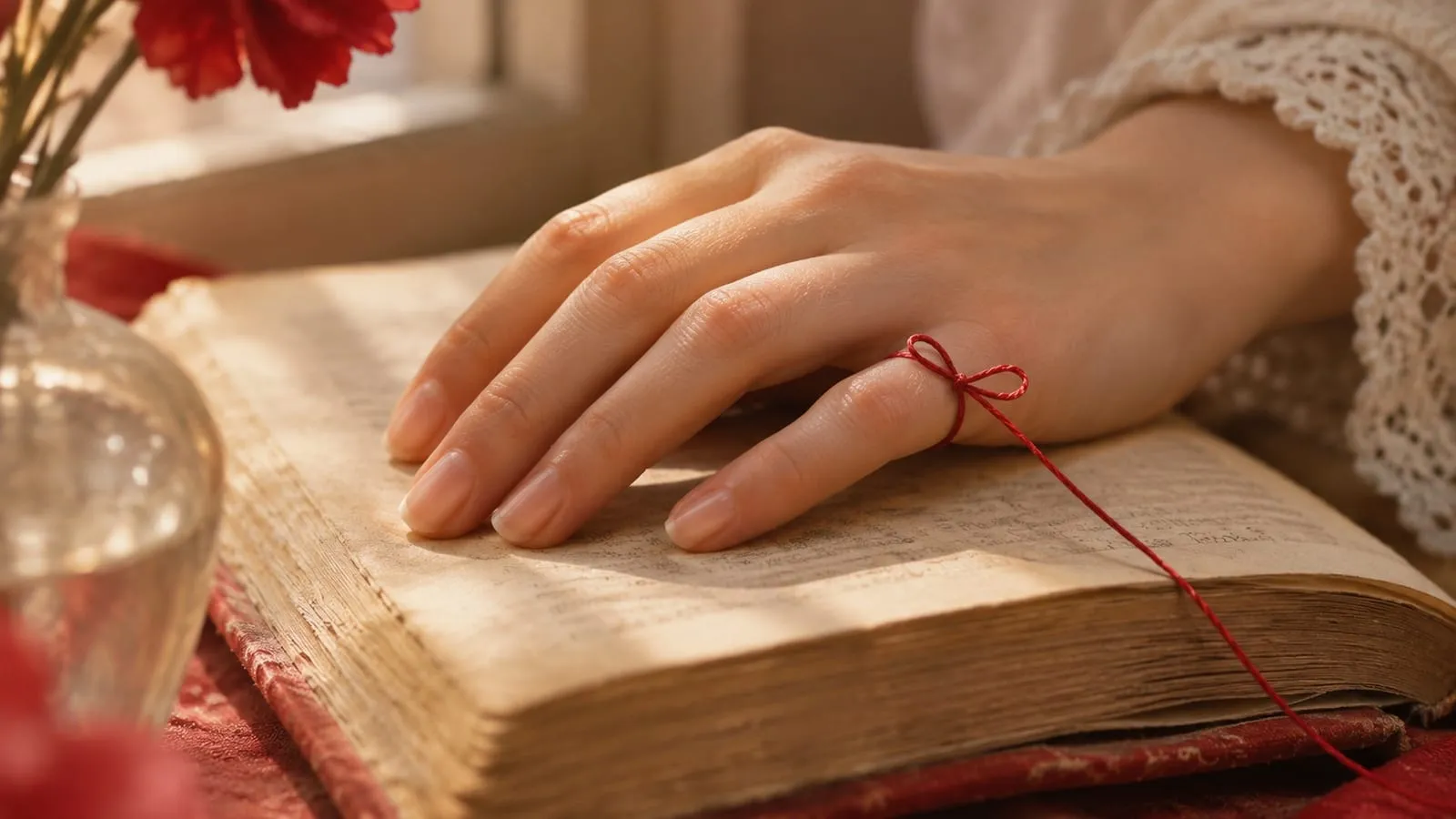
The oldest soulmate symbol is a thread. In Chinese folklore, Wikipedia says, “Yuexia Laoren (Old Man under the Moon), who acts as a matchmaker, arranges marriages,” and a Tang dynasty proverb speaks of “feet linked by red cords.” In the original story the cord is tied around the ankles; in Japan it moved to the finger.
What it says: you were meant to meet, whatever the distance. How people use it: a thin red line between two figures, a red cord bracelet pair, or a tiny red thread tattoo around a finger. The full legend is in red string of fate.
Two halves of one whole
The idea that a soulmate is your “other half” comes from Plato’s Symposium. In the speech Plato gives to the comic playwright Aristophanes, humans were once whole beings, split in two, and each half searches for the other. In Benjamin Jowett’s translation: each of us is “always looking for his other half,” and “the desire and pursuit of the whole is called love.”
What it says: you complete each other. How people use it: a heart split down the middle, two puzzle pieces that fit, half a sun and half a moon, or any image cut in two so that each person carries one part. It is also the root of the modern word, as we explain in soulmate meaning.
A gentle caveat: in the same dialogue, Socrates reports a different view, that lovers seek “neither for the half of themselves, nor for the whole, unless the half or the whole be also a good.” Even Plato did not let the two-halves idea go unquestioned.
The infinity sign
The sideways eight is the most popular soulmate tattoo of all, and its origin is mathematical. Wikipedia says the English mathematician John Wallis “is credited with introducing the infinity symbol with its mathematical meaning in 1655,” and that “this symbol is also called a lemniscate.”
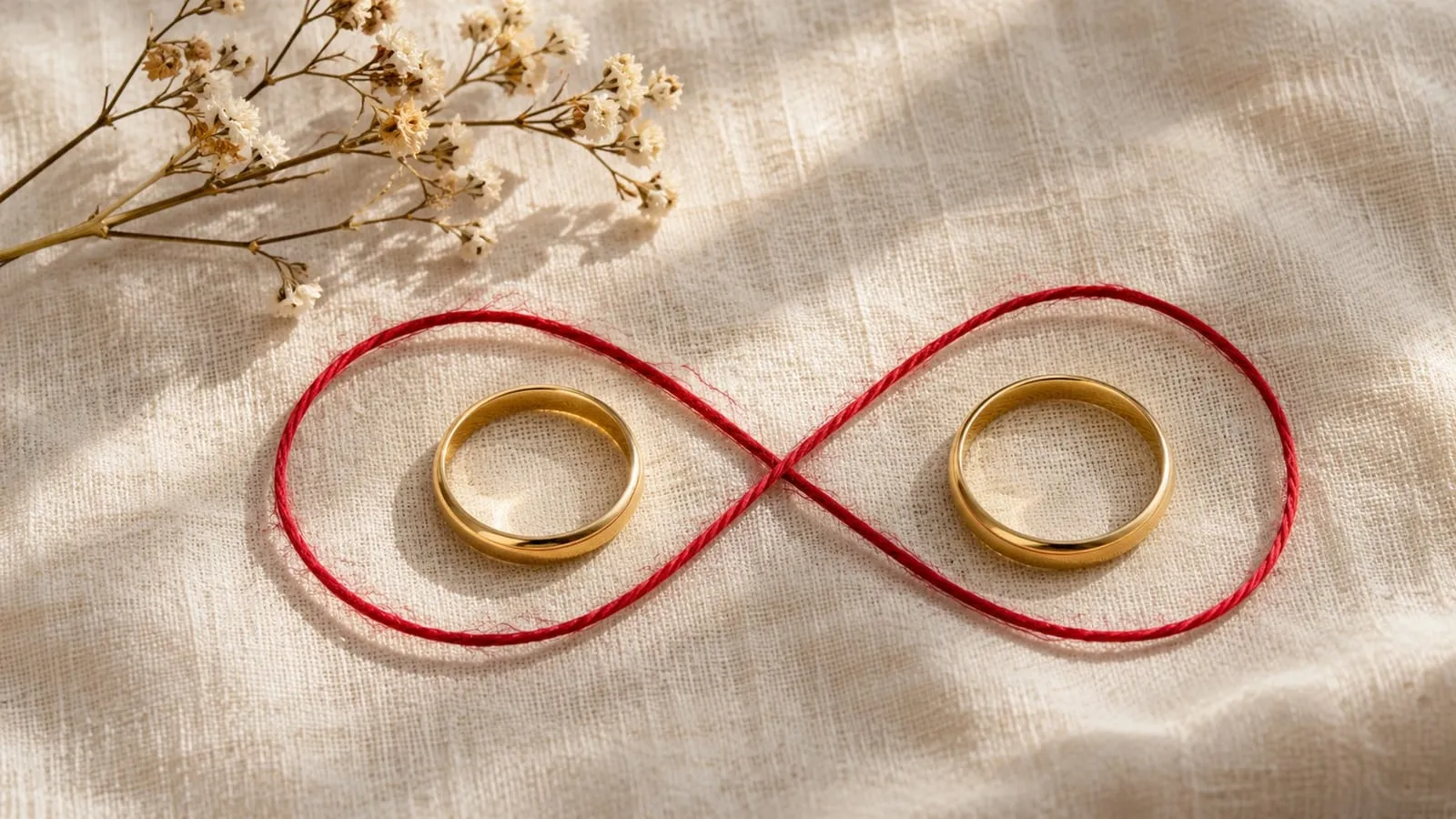
What it says: forever, without end. How people use it: alone, with two names woven into the loops, or combined with a heart. The romantic use is modern; Wallis was writing about mathematics, not love. That does not make it less meaningful, but it is good to know if someone asks.
The Claddagh ring
The Claddagh comes from Ireland, and it is one of the few soulmate-style symbols with a real tradition of use. Wikipedia describes the design as “a heart to represent love, a crown to represent loyalty, and two clasped hands to symbolise friendship,” and says “it is almost certain that it originated in or close to the small fishing village of Claddagh in Galway.” Its modern form dates to the 17th century.
The ring also says something about the wearer. Wikipedia notes that “a Claddagh ring is traditionally worn to convey the wearer’s relationship status,” and lists the code: on the right hand with the heart pointing out, single; on the right hand with the heart pointing in, in a relationship; on the left ring finger with the heart pointing out, engaged; pointing in, married.
What it says: love, loyalty and friendship together, which is close to many people’s definition of a soulmate.
Other symbols people use
A few more come up often in soulmate lists and tattoo galleries. They have long histories as symbols of love or unity in general, rather than soulmates in particular.
Interlocking hearts or rings: two of something joined, the simplest image of a pair.
Knots: a single cord with no loose ends, often in Celtic style, read as an unbroken bond.
Sun and moon: two opposites that share one sky, popular with couples who feel very different from each other.
Lock and key: one only works with the other.
Birds in pairs: two birds facing each other or flying together.
Choosing a soulmate symbol for a tattoo
Soulmate tattoos are one of the most common reasons people look for these symbols. A few practical thoughts:
Pick the idea first, then the image
Decide what you want to say. Fate points to a thread. Completion points to two halves. Forever points to infinity. Love, loyalty and friendship together point to the Claddagh. The image is easier to choose once the idea is clear.
Split designs and matching designs
A split design, where each person carries half, is the most literal soulmate tattoo. It is also the one that depends most on the relationship lasting. A matching design, where both carry the same small mark, reads just as clearly on its own. Many people choose that for a best friend or a sibling, which fits the idea of a platonic soulmate.
Keep it simple
Small symbols such as a thread, a loop or two dots joined by a line age well and are easy to place. A tattoo artist can tell you how fine a line will stay over time on the spot you choose.
Where a portrait fits
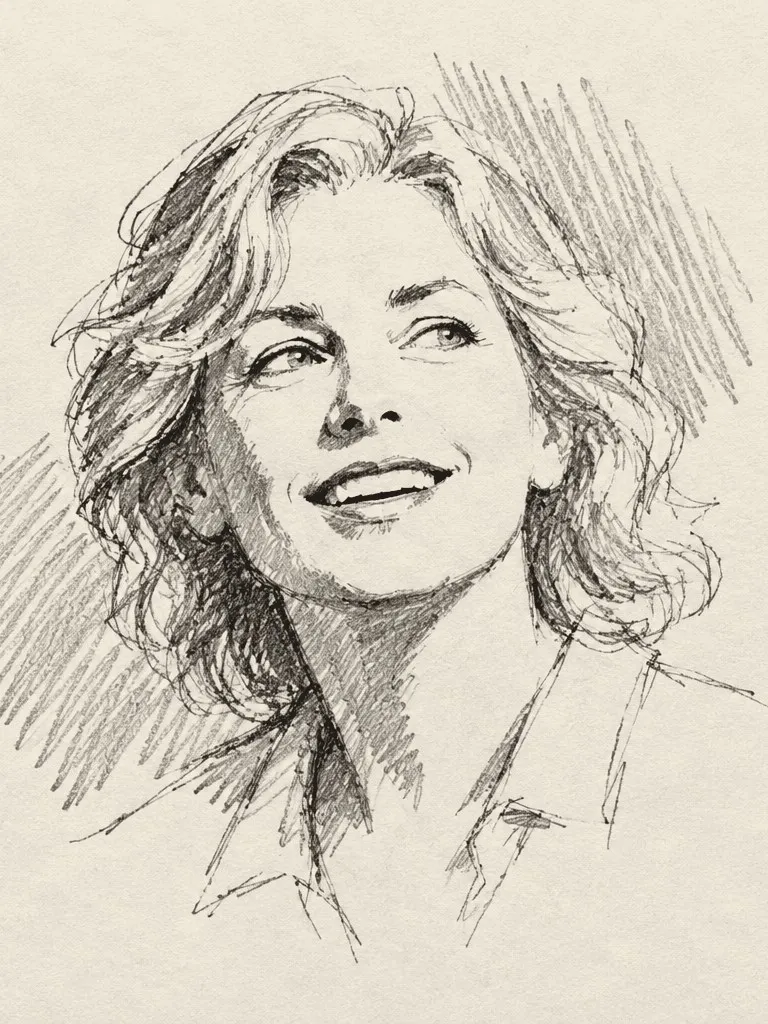
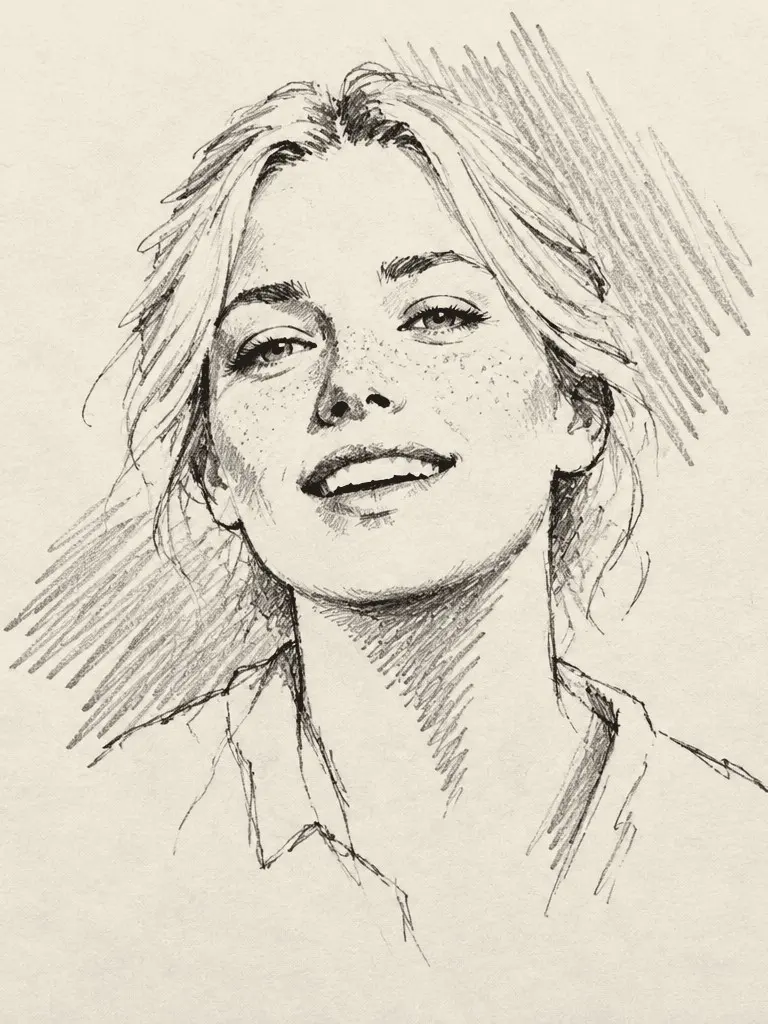
A symbol stands for a bond. Some people would rather have a picture of the person. We cannot show you a real future partner, and we do not claim to. What we make is a portrait of the kind of person your answers describe, as a keepsake and a prompt for daydreaming.
The Soulmate Studio asks seven quick questions about what draws you to someone, where you feel at home and where your heart is right now, plus your birthday (month and day only). You get one portrait, created from your answers in our signature pencil-sketch style, with a short written reading, delivered as a high-resolution image ready to print. The face is imagined, not predicted, and it is not a real person. It is for entertainment and reflection.
There is no single official one. The images people use most are the red thread of fate from East Asian legend, the two halves of one whole from Plato's Symposium, the infinity sign, interlocking shapes such as hearts or puzzle pieces, and the Claddagh ring from Ireland. Each carries a slightly different idea of what a soulmate is.
The heart is the best known symbol of love, along with the red rose. For a soulmate in particular, people tend to reach for symbols of connection instead: a thread, two halves, an endless loop or joined hands, because the idea is two people belonging together, not love in general.
A matching tattoo is a shared mark that two people choose to carry for good, so it usually stands for commitment, friendship or a bond you want to honor. Many couples split one image across two people, such as two halves of a heart or the two ends of a thread, so the design is only complete when they stand together.
No emoji is officially for soulmates, but people combine a few to say it: the infinity sign, a red heart, two hearts, or a thread or knot. Copy and paste sites list strings made of these characters for bios and messages. They work best when the other person knows what you mean by them.
Your soulmate sketch
Curious what your own answers might imagine?
Answer seven quick questions about what you notice first and where you feel at home. We turn your answers into a pencil portrait of the person they describe, sealed with a short letter written from your birthday and your choices. Imagined, for entertainment, not a prediction.
$19, paid once, no subscription
In your inbox, usually within minutes and always within 24 hours
Our method has been reviewed and approved by an independent practicing psychic we commissioned.
For entertainment. The person in the portrait is imagined, not predicted.
Dear Aries,
The first thing that comes through is how he climbs a shingle beach at low tide with a dented orange buoy under one arm, shirt open at the collar and stiff with salt, brown hair shoved in every direction by a wind he has not bothered to argue with. The faded paint on the buoy spells out a house name, Slack Tide, and he has decided it is going home tonight.
An old Chinese story says a god under the moon ties a red cord between people who are meant to marry. Here is where the legend comes from, how Japan changed it, and what people mean by a red string soulmate today.
A soulmate without the romance is not a lesser soulmate. The dictionaries already allowed for it; the rest is how people have learned to name a friendship this close.
Read the article
May we count visits to see where people stop in the quiz? If you allow it, we use Google Analytics, which sets cookies. Nothing is shared with advertisers. Privacy