Love line palm reading: the heart line, marriage lines and what palmists say
In palmistry the love line is the heart line, and the short lines under your little finger are called marriage lines. Here is how to find both, what palmists read into them, and why the guides do not agree.
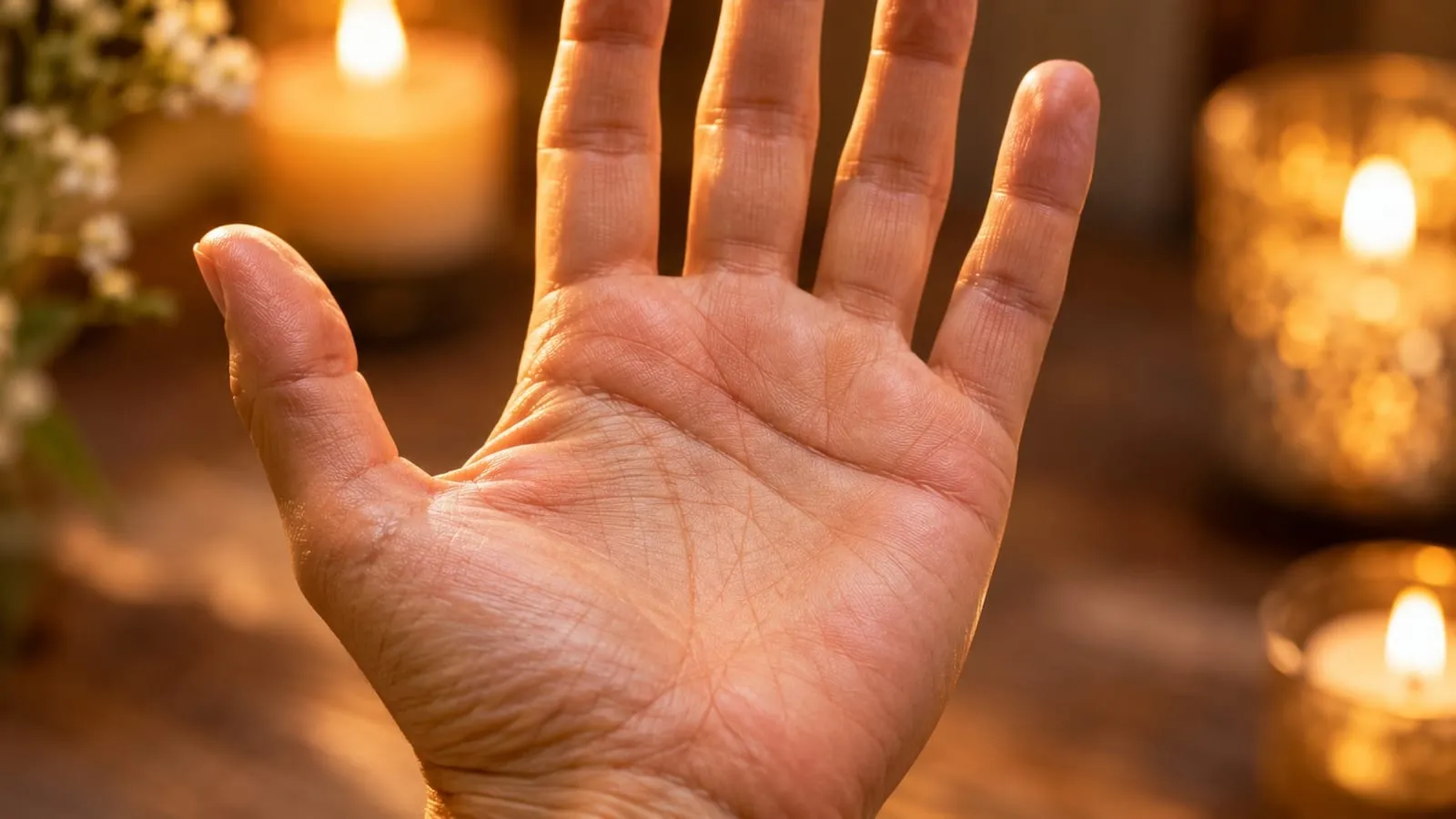
In love line palm reading, the love line is the heart line: the horizontal crease closest to your fingers, running from the little-finger edge of your palm toward your index or middle finger. Palmists read its length, curve and ending as signs of how you love. Separately, the short horizontal lines on the edge of your palm under the little finger are called marriage or relationship lines, and palmists read them as the important bonds in your life. Below is how to find both, what the guides say they mean, where those guides disagree, and what to make of it all.
Palmistry in one paragraph
Palmistry is old and widespread. Wikipedia, read on November 7, 2026, says that “from India, the art of palmistry spread to China, Tibet and to other countries in Europe,” and that it “also progressed independently in Greece where Anaxagoras practiced it.” It is also clear about its status: “Palmistry is the pseudoscientific practice of fortune-telling through the study of the palm,” and “scientific literature regards palmistry as a pseudoscientific or superstitious belief.” So read everything below the way you would read a horoscope: as a tradition with a lot of charm and no proof.
How to find your love line
Hold your hand up, palm toward you, fingers together.
Look at the top third of your palm, just under your fingers.
The highest long horizontal line is the heart line. It starts at the outer edge, under your little finger.
Follow it across. It usually ends under your index finger, under your middle finger, or between them.
Below it you will see the head line, and curving around the base of your thumb, the life line. Mindbodygreen’s guide, by Sarah Regan (updated October 2022), describes the heart line as the one that “runs horizontally across your palm and is the topmost line you’ll see,” and says it “gives us insight into our relationships.”
A note on where it sits
Even this is not settled. One course provider we read, Centre of Excellence, calls the heart line “the horizontal line that runs across the middle of the palm.” Most guides put it at the top. If you are unsure, it is the one nearer your fingers.
What the heart line is said to mean
Palmists read four things: where the line ends, its shape, how high it sits and whether it breaks.
Feature
What palmists commonly say
Where they differ
Ends under the index finger
Idealistic, high standards in love
Some read it as content but picky
Ends between index and middle finger
Warm and balanced
A few read it as giving love too quickly
Ends under the middle finger
More self-focused in love
Others call it passionate
Long and curved
Open, expressive, generous
Few disagree
Straight
More reserved or practical
Mindbodygreen links a long straight line under the index finger to empathy
Set high, near the fingers
Strong feeling
Mindbodygreen says feelings may go unsaid
Breaks or branches
Intense but changing bonds
Interpretations vary widely
The table summarizes the guides we read on November 7, 2026. Scary Mommy’s guide by Deirdre Kaye says “the higher the line, the stronger the passion.” Mindbodygreen, citing palmist Cassandra Eason, says a line set “closer to the fingers” may mean feelings are left unsaid. Same feature, opposite readings. That is normal in palmistry, and it is a good reason not to take any single guide too seriously.
Marriage lines: the short lines under your little finger
Marriage lines (also called relationship or union lines) are small horizontal creases on the edge of your palm, between the base of your little finger and the top of the heart line. Centre of Excellence says “these lines are located just above the heart line.”
How to check them
Close your hand gently so the edge of your palm folds a little. The short lines that appear there are the ones palmists mean. Some people have one, some several, and some barely any.
What palmists read into them
The common readings, from the guides we compared:
Number: each clear line is read as a significant relationship, not necessarily a marriage.
Length: Centre of Excellence says “long lines indicate a lengthy marriage, while short lines may suggest a brief marriage (or even no marriage).”
Clarity: Scary Mommy writes that “people with a straight, long marriage line are thought to be destined for a deep and abiding love.”
Position: a line closer to the heart line is read as an earlier bond, one nearer the little finger as a later one. Centre of Excellence: “Marriage lines closer to the heart line suggest that the person may marry early in life.”
Some guides go further and read lines as predictions of divorce, infidelity or a partner’s death. We do not repeat those. No line on a hand can tell you anything like that, and nobody should worry about a crease.
Which hand do palmists read?
This is the most common question, and the guides split.
Mindbodygreen says the heart line is read on the dominant hand, and the non-dominant hand reflects your “natural, potential self.”
Scary Mommy says “the right hand is typically the main focus during a reading, and the left hand is used to determine the rest of who you are.”
Most palmists look at both and compare them. If you are right-handed, the two advice lines agree; if you are left-handed, pick a rule and stick to it.
What a palm can and cannot say about love
In palmistry’s own terms, the heart line describes your style: how openly you show feeling, how quickly you attach, what you need. That can be a fun prompt for reflection, the same way a zodiac compatibility chart can.
What no palm can do is show a person. There is no line for your future partner’s face or name, and no line for when you will meet. If you are asking that second question, our article when will I meet my soulmate? looks at what the numbers actually say. And if you are trying to read a real relationship, the signs you met your soulmate that therapists talk about are more useful than any crease.
Where a portrait fits
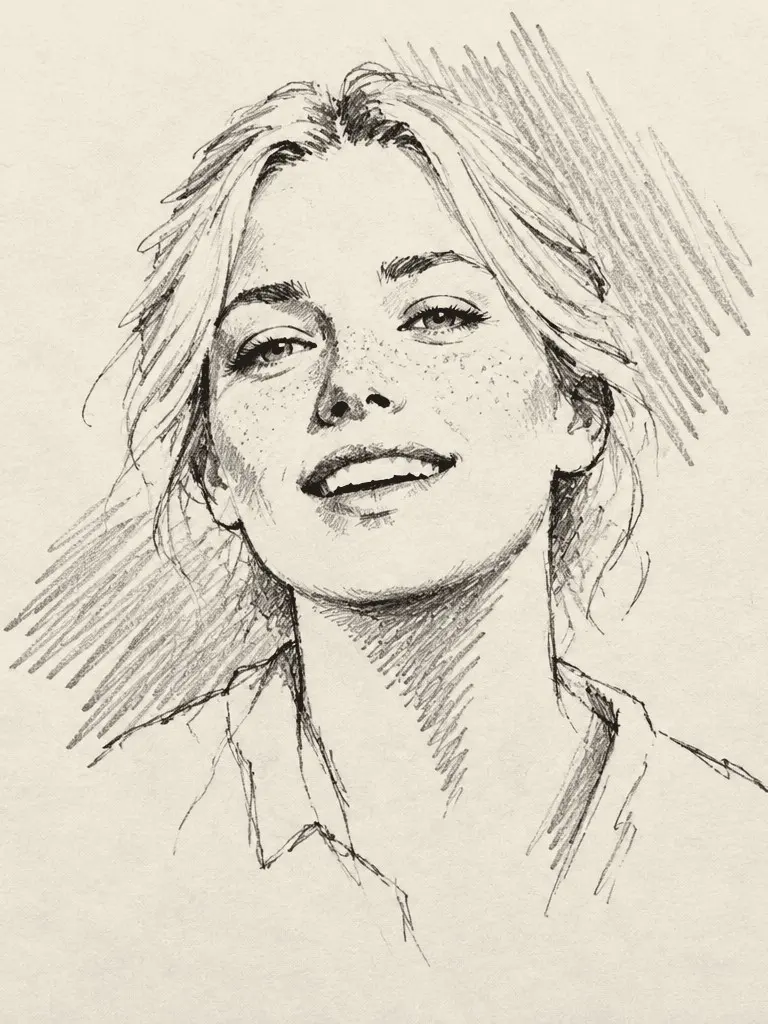
Palm reading is about you. A portrait is about the other side of the question: what kind of person you are drawn to. We cannot show you your future partner, and we do not claim to. What we make is a picture of the person your answers describe, as a game and a prompt.
The Soulmate Studio asks seven quick questions about what draws you to someone, where you feel at home and where your heart is right now, plus your birthday (month and day only). You get one portrait, created from your answers in our signature pencil-sketch style, with a short written reading. The face is imagined, not predicted, and it is not a real person. It is for entertainment and reflection.
In palmistry the love line is the heart line: the long horizontal line nearest your fingers, starting at the little-finger edge of the palm and running toward your index or middle finger. Some guides also call the short lines on the edge of the palm, under the little finger, love or marriage lines. They are a separate set.
Hold your palm up and look at the top of it, just below your fingers. The heart line is the horizontal line closest to them, beginning at the outer edge under your little finger. The head line runs below it, and the life line curves around your thumb. If you are unsure, the love line is the one nearer your fingers.
You have them on both hands. Palmists disagree on which hand to read: one guide we read says the right hand is the main focus and the left shows the rest of who you are, another says the dominant hand shows who you are now. Many palmists read both and compare them.
Close your hand slightly and look at the outer edge of your palm, between the base of your little finger and the top of the heart line. The short horizontal creases there are what palmists call marriage or relationship lines. Count them, and look at length and depth. Treat whatever you see as a fun reading, not a forecast.
No. Palmistry, in the tradition's own terms, describes your temperament and the shape of your love life, not the face or name of a partner. Science regards it as a pseudoscience, so even those readings are a game. If you want to picture a person, a portrait from your answers is a more honest kind of make-believe.
Your soulmate sketch
Curious what your own answers might imagine?
Answer seven quick questions about what you notice first and where you feel at home. We turn your answers into a pencil portrait of the person they describe, sealed with a short letter written from your birthday and your choices. Imagined, for entertainment, not a prediction.
$19, paid once, no subscription
In your inbox, usually within minutes and always within 24 hours
Our method has been reviewed and approved by an independent practicing psychic we commissioned.
For entertainment. The person in the portrait is imagined, not predicted.
Dear Aries,
The first thing that comes through is how he climbs a shingle beach at low tide with a dented orange buoy under one arm, shirt open at the collar and stiff with salt, brown hair shoved in every direction by a wind he has not bothered to argue with. The faded paint on the buoy spells out a house name, Slack Tide, and he has decided it is going home tonight.
No sign is anyone's official soulmate. What astrology has is a wheel, four elements and a few angles, and from those every sign gets the same short list of matches.
Nobody can put a date on meeting a person, and that includes us. What you can get is a clearer idea of what you are waiting for.
Read the article
May we count visits to see where people stop in the quiz? If you allow it, we use Google Analytics, which sets cookies. Nothing is shared with advertisers. Privacy