When will I meet my soulmate? What no one can tell you, and what you can ask instead
Nobody can put a date on meeting a person, and that includes us. What you can get is a clearer idea of what you are waiting for.
By the Soulmate Studio teamPublished 9 min read

When will I meet my soulmate? Nobody can tell you, and that includes us. No quiz, birth chart, tarot spread or birthday can put a date on meeting a person, and anything that offers one is guessing. What you can get is a clearer sense of what you are waiting for, and whether waiting is even the right word. Below is what the popular ways of asking really do, what the numbers on meeting partners say, what the “3-6-9 rule” is about, and a few questions that tend to help more than a date would.
The short answer
There is no way to know, for two reasons. The first is obvious: nobody can see the future. The second is quieter: “soulmate” is not one fixed thing you could time. Merriam-Webster defines a soulmate as “a close friend or romantic partner with whom one has a unique deep connection based on mutual understanding and acceptance.” By that definition you may have met one already, as a friend, and you may meet more than one in a lifetime.
What the question usually carries is a feeling: impatience, hope, or a worry that it will never happen. Those feelings are real and deserve attention. A date would not settle them anyway, because the next question would be “and will it work?”
Why so many people ask
The idea behind the question is common. In a 2011 Marist Poll of 1,018 US adults, 73 percent said yes to the idea of soul mates, described in the question as “two people who are destined to be together.” If someone is destined for you, asking when they will arrive is a natural next step. The poll is old, and we did not find a newer one that asked the same thing, but it shows how ordinary the hope is.
The quizzes that answer this search seem to know it. Marriage.com describes its “When will I meet my soulmate?” quiz as “meant purely for fun, not something to take as an exact forecast.” Arealme calls its version “a fun way to reflect on where you are in that journey.” That candor is the most useful line on either page.
The ways people look for a timeline
Quizzes
A timeline quiz asks about your habits, your openness and your idea of a good date, then hands back a playful estimate: this year, in a few years, or “you may have met them already.” The result is built from your answers, sorted by whoever wrote the quiz.
What it is good for: a light way to notice how you feel about love right now. If the result surprised you, look at which answers pushed it there. What it cannot do: know anything about a person you have not met.
Astrology: the 7th house, Venus and Jupiter
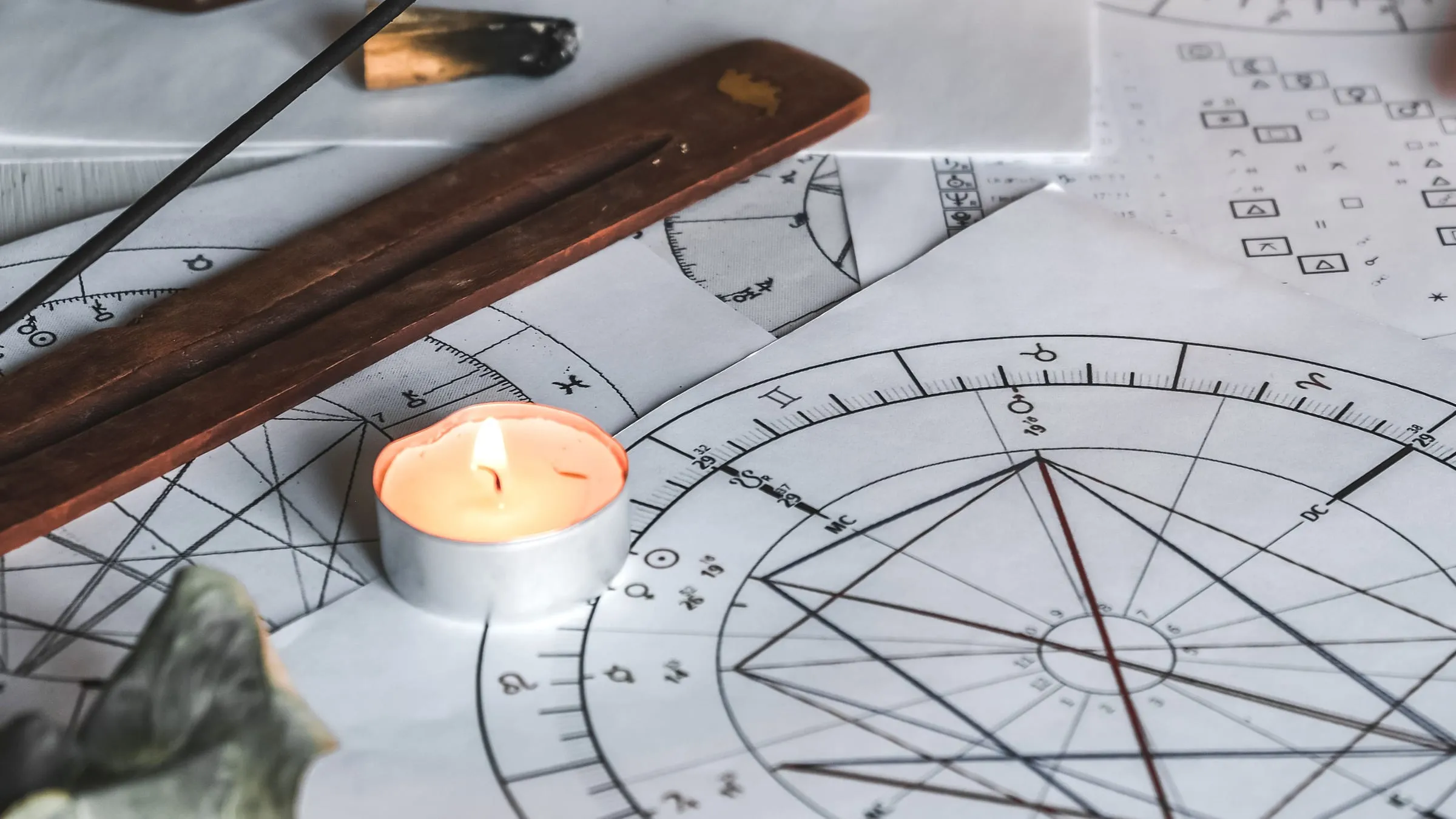
In astrology writing, this question is answered from the full birth chart, not just your sun sign. Across the astrology pages we read, the common core is the same. Astrologers look at the 7th house, described as the house of partnerships and marriage, and at Venus, the planet they associate with love. Timing is read from transits, meaning where the planets move in relation to your chart. YourTango writes that some transits are seen as a time “prime for meeting your person,” especially if a transit “activates your natal Venus and the ruler of the 7th house,” and it singles out Jupiter moving through the 7th house. One astrology blog goes further: “The ruler of your 7th house tells you where and when you will meet your spouse.”
Other pages skip the chart and give an age per sign. Astroyogi, which appears in the results for this search, says about 27 for Leo, 20 for Libra, around 28 for Sagittarius and 18 for Taurus, and for Virgo, “It is not known.” Other lists give other ages for the same signs, and none explains where its numbers come from.
Be clear about what this is. These are beliefs, described here as their writers describe them. Britannica puts the scientific view plainly: “Astrology is not supported by science.” If you enjoy astrology, a transit can be a nice reason to say yes to more invitations. It is not an appointment. For what the birthday itself does and does not carry, see our guide to soulmate by birth date.
Numerology and birth-date lists
Numerology offers a second birthday-based answer. The pages that use it tend to work from the day of the month and group the days whose digits reduce to the same number: the 1st, 10th, 19th and 28th form one group, the 2nd, 11th, 20th and 29th another, and so on. Each group is then given a story about love or about when it arrives. The lists disagree about which groups match and what each one means, and Britannica notes that numerology only “purports to divine” a person’s nature and prospects.
What it is good for: curiosity, and a shared joke with friends born on the same day. What it cannot do: time an event.
Tarot and other systems
Searches for this question also pair it with tarot and with the “destiny matrix.” Britannica defines tarot as “any of a set of cards used in tarot games and in fortune-telling.” Some people use a spread as a structured way to think about what they want from love, which can be worthwhile. We have not reviewed destiny matrix sources, so we will not describe how it works. The same limit applies to it as to everything above: any method that returns a date is offering a story, not a forecast.
What the numbers say about meeting someone
No survey tracks soulmates, but some track how and when people pair up. They are worth knowing mostly for what they cannot tell you.
- Marriage is happening later. The US Census Bureau estimated the median age at first marriage in 2025 at 30.8 for men and 28.4 for women, up from 23.5 and 21.1 in 1975. That is marriage, not meeting, and half of people marry later than the median.
- Where people meet has changed. In a 2017 survey analysed by Stanford sociologist Michael Rosenfeld, about 39 percent of heterosexual couples said they met online, up from 22 percent in 2009. Meeting through family, church and the neighborhood has been declining since 1940, according to the same study.
- Apps are one route among several. A Pew Research Center survey published in 2023 found that 10 percent of partnered US adults met their current partner on a dating site or app, rising to 20 percent of partnered adults under 30.
Put together, these numbers describe crowds, and crowds spread out. Some people meet a lifelong partner at 19, some at 55, some more than once. A median is a midpoint, not a schedule, and nothing in the data points to a date for you.
The 3-6-9 rule, and what it is really about
One of the questions people ask next is “What is the 3 6 9 month rule?” It is not about when you meet anyone. It is an informal guide, spread on TikTok, for the first nine months after you do.
Writers describe it in three stretches. In Psychology Today in January 2026, Bruce Y. Lee calls the first three months “The Honeymoon Stage,” when “your judgment is clouded,” the next three “The Conflict Stage,” when you see “whether and how you resolve disagreements,” and the last “The Decision-Making Stage.” Bustle, quoting clinical psychologist Sabrina Romanoff, describes the same shape: a honeymoon, then months “when life can get rocky and real,” then a point where you should be able to decide. Not every writer uses the same labels; relationship expert Terri Orbuch, quoted by Astute Counseling, describes the middle stretch as “building a deeper connection” rather than conflict.
The writers also agree on its limits. Lee says the rule “isn’t a hard and fast one,” and couples therapist Daniel Dashnaw writes that it “is not a scientific law” and that no single peer-reviewed study validates the exact timeline. Read it as a reminder that it takes months, not moments, to know someone. That is also a gentle answer to the timing question: even after you meet, recognizing a deep connection takes a while. Our article on signs you met your soulmate goes through what people describe noticing along the way.
Waiting for “the one” versus building it
How you picture a soulmate changes what “when” means. In February 2026 the BBC reported on research that separates two sets of beliefs. Psychologists call the first “destiny beliefs,” “the idea that the right relationship should feel effortless,” and the second “growth beliefs,” which “focus on what partners can do to make things work.” According to the BBC, studies led by C. Raymond Knee at the University of Houston in the late 1990s and early 2000s found that people who saw relationships as “meant to be” were far more likely to doubt their commitment after conflict, while growth-minded people tended to stay committed even on days they argued.
Jason Carroll, a professor of marriage and family studies at Brigham Young University, put the difference this way to the BBC: “A soulmate is just simply found. It’s already pre-made. But a one and only is something two people carve out together over years.”
If you hold the first view, “when will I meet my soulmate” is a question about fate and arrival. If you lean toward the second, the question shifts toward what you want to build and with what kind of person. Neither view is wrong to hold, and most people hold a bit of both. It helps to know which one is doing the asking. We look at the question behind all this in do soulmates exist.
Questions worth asking instead of “when”
These are for reflection, not a test, and none has a right answer. Try writing one line for each.
- What am I hoping will change when I meet them? Some of it may be something you can start on now, alone or with friends.
- Where is my heart right now? Single and open, healing from something, in something but unsure, or happily taken and just curious. Each one asks a different question under the same words.
- Would I recognize them if they looked nothing like I imagined? Most of the signs people describe are about how someone makes you feel, not how they look.
- Who already feels like a soulmate in my life? The dictionary definition includes a close friend, and noticing that can take some of the pressure off.
- Am I waiting for a feeling of fate, or looking for a way of being together? That is the destiny and growth question in plain words.
If you want more questions of this kind, who is my soulmate has a longer set about what you are looking for, and how to find your soulmate covers what researchers and relationship writers suggest doing in the meantime.
Where a portrait fits
A portrait cannot tell you when either, and ours does not try. It is a way to put a face to what you are hoping for while you wait. The Soulmate Studio asks seven quick questions, including what draws you to someone first, where you feel most at home and where your heart is right now, plus your birthday (month and day only, never the year). You get one portrait in our signature pencil-sketch style and a short written reading that uses your sun sign and your answers. The face is imagined, not predicted, and it is not a real person. It is for entertainment and reflection.
 Example portrait
It costs $19, paid once, no subscription, and arrives by email, usually within minutes and always within 24 hours. You can read a sample reading first to see the tone, or start your sketch now. It takes about a minute.
Common questions
At what age will I find my soulmate?
No one can name an age for you, and anyone who does is guessing. Surveys only describe averages across millions of people, and those averages keep moving: Americans now marry years later than they did in the 1970s. Your own timing depends on choices and chance that no chart or quiz can see.
What is the 3 6 9 month rule?
It is an informal dating guide, popular on TikTok, that splits the first nine months of a relationship into three stretches: a honeymoon, a stage where conflict and real life show up, and a point where you decide whether to commit. It is a rough rule of thumb about a relationship you are already in, not a research finding.
Can astrology tell me when I will meet my soulmate?
Astrologers say it can hint at timing, usually by reading transits to the 7th house and Venus in a full birth chart. That is a belief, not a tested method, and different astrologers give different answers for the same sign. Treat any date as a prompt for reflection, never as an appointment.
Are when will I meet my soulmate quizzes accurate?
No, and the better ones say so. A quiz can only rearrange the answers you give it into a playful estimate. It knows nothing about the people you have not met yet. Enjoy one for the conversation it starts, and notice which of your own answers pushed the result where it landed.
Can my date of birth show when I will meet my soulmate?
Only within a belief system. Numerology and sun-sign lists link days or signs of birth to love, but the lists disagree with each other and none has been tested. Your birthday can be a fun way into the question. It cannot carry information about another person or a future date.