Who is my soulmate? Five honest ways to look for the answer
Nothing can tell you who your soulmate is. Some things can help you see what you are looking for, and one gives you a face to look at.
By the Soulmate Studio teamPublished 8 min read

Who is my soulmate? Nothing can tell you for certain. No quiz, birth chart, card spread or portrait can name a real person, and anything that claims to is guessing. What these tools can do is help you put words to what you want, and that is the part worth having. Below are five ways people look for the answer, what each one really does, and a few questions that get you closer than any of them.
Why “who is my soulmate” has no single answer
Start with what the word means, because the answer depends on it. Merriam-Webster defines a soulmate as “a close friend or romantic partner with whom one has a unique deep connection based on mutual understanding and acceptance.” Cambridge Dictionary says it is “someone, usually your romantic or sexual partner, who you have a special relationship with, and who you know and love very much.”
Both definitions describe a relationship, not a person waiting to be identified. Neither says there is only one, and neither says you were born to meet them. That leaves a lot of room. It means the answer to “who is my soulmate” can be a partner, a friend, or someone you have not met, and it can change over a lifetime.
The idea is popular, though. In a 2011 Marist Poll of 1,018 US adults, 73 percent said yes when asked whether they believe in “the idea of soul mates, that is two people who are destined to be together.” That is data from 2011, and we did not find a newer poll, but it shows why so many people go looking. If you want the different words people use for destined partners, including twin flames and karmic partners, our guide to twin flame vs soulmate sets them out with their sources.
Who says yes
The same Marist release breaks the answer down by age. Younger adults were the most likely to say yes: 80 percent of those under 30 and 78 percent of those 30 to 44, against 72 percent of those 45 to 59 and 65 percent of those 60 and older. Among men, 74 percent said yes, and among women, 71 percent. The word is not new, either: Merriam-Webster traces the earliest known use of “soul mate” to an 1822 letter from the English poet Samuel Taylor Coleridge.
An old picture, not a method
The idea of a single other half is old. In Plato’s Symposium, the playwright Aristophanes says of humans, in Benjamin Jowett’s translation, that each “is always looking for his other half.” Plato himself never used the word soulmate, and the speech is a character’s story, not the author’s view. It is a lovely picture. It is not a method.
Five ways people look for the answer
Personality quizzes
A quiz asks about your habits and preferences and hands back a type or a description. It is honest about what it can do only if you read the result as a mirror. A quiz can only reflect your own answers. It cannot know anyone else.
What it is good for: noticing patterns in what you say you want. What it cannot do: point to a person. If a quiz gives you a name, a date or a place, that is a claim it cannot support.
Sun sign and astrology
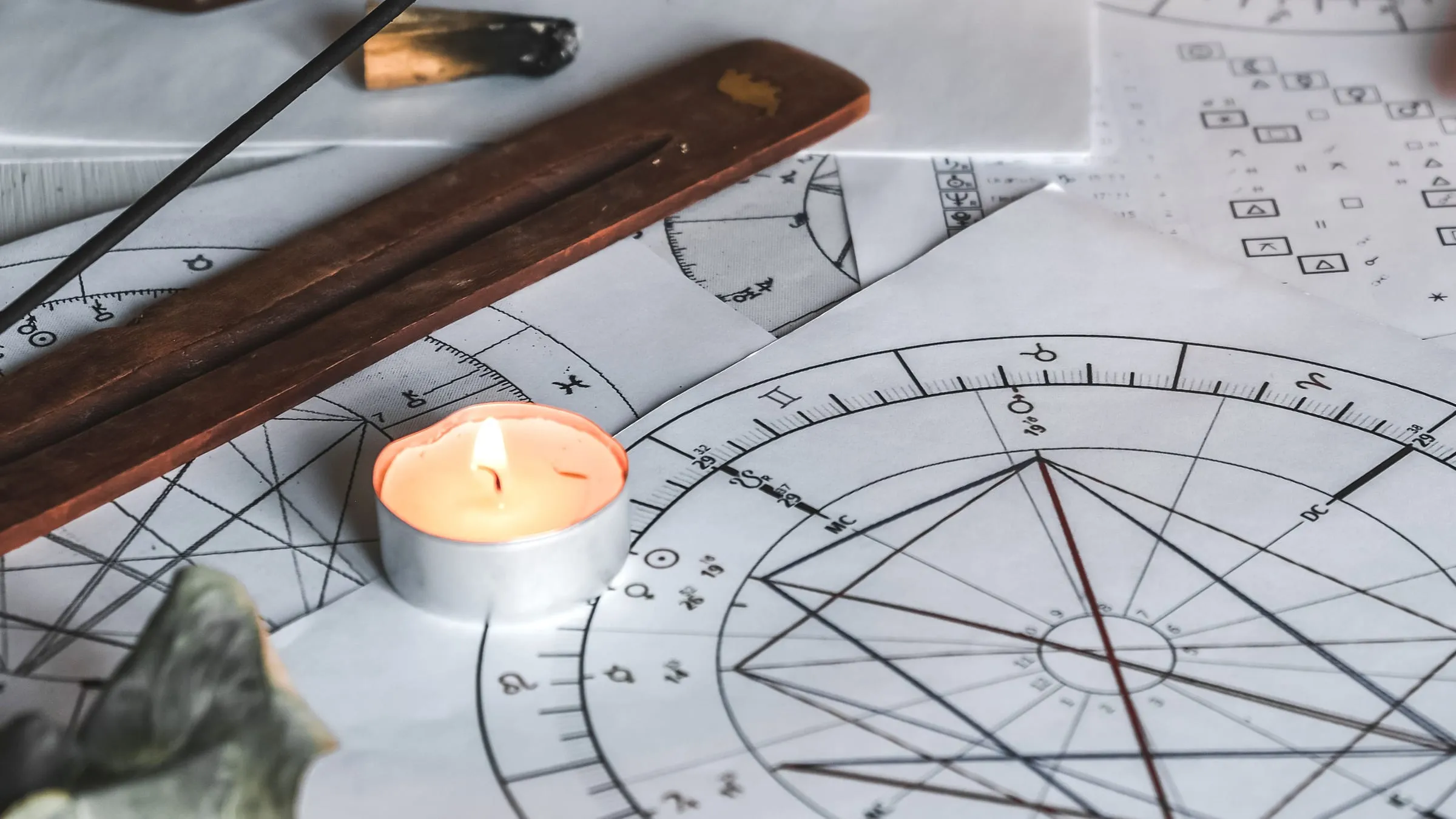
Astrology starts from the date of your birth. Your sun sign comes from your birth month and day, and traditional astrology pairs signs by element and by the angle between them. Our article on soulmate by birth date has all 12 signs with their traditional matches and their dates.
Be clear about what it is. Britannica writes: “Astrology is not supported by science. No correlation has been found between birth dates and personality or intelligence.” Britannica also reports that in a 2022 poll 27 percent of Americans said they believed in astrology, and 37 percent of those under 30. Many people enjoy it anyway, as a language for talking about temperament.
What it is good for: a playful way to describe what you like in people. What it cannot do: rule anyone in or out.
Numerology
Numerology works from numbers. Britannica says that “modern numerology attaches a series of digits to an inquirer’s name and date of birth and from these purports to divine the person’s true nature and prospects.” Note the word “purports”. Many numerology sites go a step further and compare two people’s numbers for compatibility, often a Life Path number worked out from the full date of birth; Britannica’s description does not go that far.
What it is good for: curiosity about the numbers in your own life. What it cannot do: identify a person, or show that two people will get on.
Tarot
Britannica defines tarot as “any of a set of cards used in tarot games and in fortune-telling,” and says tarot decks were invented in Italy in the 1430s. Whether it is meaningful to you is a personal matter. Some readers use a spread as a prompt to reflect on a relationship they are in or hope for.
What it is good for: giving you a structured way to think aloud. What it cannot do: foretell who you will meet. The cards do not know.
A portrait from your answers
This is the way we make, so we will describe it plainly. The Soulmate Studio asks seven quick questions about what draws you to someone first, where you feel most at home, who we should draw, roughly what age they should look, optionally a skin tone, your birthday (month and day only, never the year), and where your heart is right now. You get one portrait in our signature pencil-sketch style, plus a short written reading of around 300 words that draws on your sun sign and your answers. It is one soulmate sketch, made for you.
What it is: a picture built from your own answers. What it is not: a prediction. The face is imagined, not predicted, and not a real person. It is for entertainment and reflection. Where a quiz reflects your answers in words, a portrait reflects them in a face, and a face gives you something to react to, which can make the answers easier to think about. You can read a sample reading to see the tone, and how it works explains the steps.
What it is good for: giving you something to look at while you work out what you want. What it cannot do: tell you who exists.
What that looks like in practice
Our sample reading is written for a set of example answers, so you can see how a portrait and a reading relate to what someone says. In it, the example person chose a quiet stretch of coast as the place they feel most at home and a warm laugh as the first thing that draws them in. The portrait beside the reading shows an imagined man in his thirties, and the reading is written around those two choices, not around a prediction. The point of the example is the link between answer and image: change the answers and the portrait changes with them.
Questions worth asking yourself instead
The best answer to “who is my soulmate” usually comes from asking a different question. These are reflective, not advice, and none of them has a right response.
- How do I feel around this person after an hour, and after a week? The dictionary definition is built on “mutual understanding and acceptance”. Do you feel understood and accepted?
- Am I more myself with them, or less?
- What do I keep noticing that draws me in? Your answer is the first thing you would put on a portrait.
- What do I want the next year of my life to look like? People are easier to recognize when you know what you are looking for.
- What would I want from a friend before I wanted it from a partner? Both definitions above allow for a friend.
- Am I confusing intensity with a match? A relationship can feel intense for reasons that have nothing to do with fate, and Cleveland Clinic’s expert warns that harm comes when such ideas make you stay in situations that are not good for you.
Try answering them on paper, one line each, and leave them for a day. Then read them back and notice how many of your answers are about how you want to feel rather than how someone should look. Those are the answers that stay the same whoever turns up, and they are the ones worth keeping.
If you want to go further into the last one, the twin flame vs soulmate guide covers how psychologists describe intense, fated-feeling relationships and what to watch for.
What a useful answer looks like
A useful answer to “who is my soulmate” is not a name. It is a short description you could hold up against real people and see whether it fits. It has two halves.
The first is about the person: the things you would notice first, the setting you picture, roughly the age, the kind of laugh. The second is about the two of you: how you want to feel together, what you want to keep of your own life, and what you would not accept. Every one of the five ways above can feed one of those halves. A quiz tends to feed the second half, astrology and numerology give you words for temperament, tarot gives you a prompt, and a portrait gives you the first half in a form you can look at.
Write your description down, and give it a date. Come back in six months and read it again. If it has changed, that is not a failure of the method. It is the reason to write it down: you have learned something about what you want.
How to use all of this together
Nothing here needs to be a single choice. A sensible sequence is to read a definition so you know what you are looking for, use whichever of the five ways you enjoy as a prompt, write down what came up, and then answer the six questions above in your own words. If a face would help, a portrait is a quick way to turn the answers into something to look at.
What you should not do is hand the decision to any of them. The person who is right for you will show up in how you feel and behave over time, and no tool can see that in advance. If you would like to read more, what does my soulmate look like is about picturing them, and signs you met your soulmate covers what people describe and what none of it proves. If your question is less “who” than “how do I meet them,” our guide on how to find your soulmate looks at how couples actually meet today.
 Example portrait
When you are ready, you can start your sketch. It takes about a minute, and the reading and portrait arrive by email, usually within minutes and always within 24 hours.
Common questions
How do I know who is my soulmate?
You cannot know for certain, because no test identifies a soulmate. What you can notice is how someone makes you feel and act over time: understood, accepted, more yourself. That matches the dictionary idea of a deep connection built on mutual understanding. Treat quizzes, signs and portraits as prompts for that noticing, not as answers.